Verk
124 - Lucrezio, 94-55 a.C. ca. De rerum natura, I secolo a.C.
URI: https://mylod.org/myll/work/124
Emne: Filosofia antica [Q204100] · Filosofia epicurea · Filosofia romana [Q3745515] · Materialismo [Q7081]
Verksform : Poema didascalico latino in esametri di genere epico-filosofico
Foretrukket tittel: De rerum natura
Representativt uttrykk (LRM-E2-A2): Lucrezio, 94-55 a.C. ca. De rerum natura, I secolo a.C. Latino
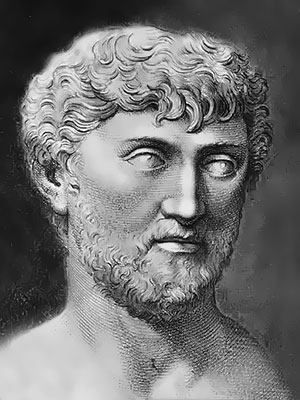
Autoritetspost
Lucrezio, 94-55 a.C. ca.
Fødselsdato: 94 BCE
Dødsdato: 55 BCE
Poeta e filosofo romano (94-55 a.C. ca.), autore del poema didascalico De rerum natura, di ispirazione epicurea.
Vis fullstendig postVerk med samme emne:
Trykt
Uttrykk
151
URI: https://mylod.org/myll/expression/151
Lucrezio, 94-55 a.C. ca. De rerum natura, I secolo a.C. Italiano (Fellin)
Italiano
Espressione parallela: Lucrezio, 94-55 a.C. ca. De rerum natura, I secolo a.C. Latino
Format: Testo
Ansvarsangivelse : Fellin, Armando (Redaktør (utgave)) (LRM-R6)
Manifestasjon
126
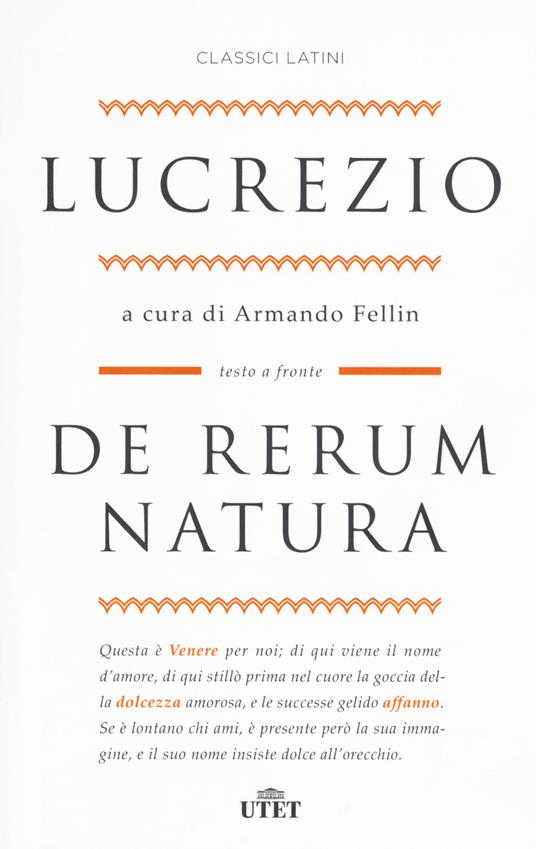
URI: https://mylod.org/myll/manifestation/126
Hovedtittel: De rerum natura
Agentens ansvarsangivelse : UTET (Forlag)
Utgivelsessted: Torino
Utgivelsesdato: 2017
ISBN: 9788851151713
Beskrivelse: 503 sider
Serie: Classici latini
Sammendrag / innholdsoversikt: Il De rerum natura di Lucrezio (I secolo a.C.) è un poema filosofico che espone la concezione epicurea della natura e dell’uomo. Lucrezio sostiene che tutto sia costituito da atomi e vuoto e che gli eventi naturali non dipendano dall’intervento degli dèi. L’opera mira a liberare l’uomo dalla paura della morte e degli dèi, mostrando come la conoscenza della natura possa condurre alla serenità.
Medietype: Tekst
Bærertype: Bind (papir)
Eksemplar
120
URI: https://mylod.org/myll/item/120
Bibliotek: MyLODLibrary
Hyllesignatur: FIL.LUC-01
Plassering: Sezione Filosofia
Graf over de benyttede IFLA/LRM-relasjonene
åpne i fullskjerm for å zoome og panorere ·Lucrezio, 94-55 a.C. ca. De rerum natura, I secolo a.C.
Poema didascalico latino in esametri di genere epico-filosofico
🌐 Latino"] class W work; NW_P["LRM-E9 Nomen
preferred title
Lucrezio, 94-55 a.C. ca. De rerum natura, I secolo a.C."] W -- LRM-R13 --> NW_P class NW_P nomen; TS255["LRM-E11 Time-span
I secolo a.C."] class TS255 timespan; W -- LRM-R35 --> TS255 TH_126["LRM-R12 Subject
skos:Concept
Filosofia antica"] W -- LRM-R12 --> TH_126 class TH_126 thema; TH_138["LRM-R12 Subject
skos:Concept
Filosofia epicurea"] W -- LRM-R12 --> TH_138 class TH_138 thema; TH_15["LRM-R12 Subject
skos:Concept
Filosofia romana"] W -- LRM-R12 --> TH_15 class TH_15 thema; TH_45["LRM-R12 Subject
skos:Concept
Materialismo"] W -- LRM-R12 --> TH_45 class TH_45 thema; AG212["LRM-E7 Person
👤 Lucrezio, 94-55 a.C. ca."] class AG212 agent; OCC_AG212_0["LRM-R21 Occupation
Filosofo"] AG212 -- LRM-R21 --> OCC_AG212_0 class OCC_AG212_0 occupation; FLD_AG212_0["LRM-R12 Subject
field of activity
Filosofia epicurea"] AG212 -- LRM-R12 --> FLD_AG212_0 class FLD_AG212_0 thema; FLD_AG212_1["LRM-R12 Subject
field of activity
I secolo"] AG212 -- LRM-R12 --> FLD_AG212_1 class FLD_AG212_1 thema; FLD_AG212_2["LRM-R12 Subject
field of activity
Materialismo"] AG212 -- LRM-R12 --> FLD_AG212_2 class FLD_AG212_2 thema; FLD_AG212_3["LRM-R12 Subject
field of activity
Filosofia romana"] AG212 -- LRM-R12 --> FLD_AG212_3 class FLD_AG212_3 thema; AG212 -- autore --> W E152["LRM-E3 Expression
E152
🌐 Latino
Testo"] W -- LRM-R2 --> E152 class E152 expression; NE_152["LRM-E9 Nomen
expression label
Lucrezio, 94-55 a.C. ca. De rerum natura, I secolo a.C. Latino"] E152 -- LRM-R13 --> NE_152 class NE_152 nomen; E152 -- LRM-R3 --> M126 M126["LRM-E4 Manifestation
M126"] class M126 manifestation; NM_P126["LRM-E9 Nomen
title proper
De rerum natura"] M126 -- LRM-R13 --> NM_P126 class NM_P126 nomen; PL_M126["LRM-E10 Place
Torino"] M126 -- LRM-R33 --> PL_M126 class PL_M126 place; TS14["LRM-E11 Time-span
2017"] class TS14 timespan; M126 -- LRM-R35 --> TS14 PD_M126["📐 Physical description
503 sider"] M126 -. physical description .-> PD_M126 class PD_M126 manuscript; SR_M126["📚 Series
Classici latini"] M126 -. series .-> SR_M126 class SR_M126 manuscript; CT_M126["⚙ Carrier/content
media: Tekst
carrier: Bind (papir)"] M126 -. carrier/content .-> CT_M126 class CT_M126 manuscript; NT_M126["📝 Note
summary: Il De rerum natura di Lucrezio (I secolo a.C.) è un poema f…"] M126 -. note .-> NT_M126 class NT_M126 manuscript; NM_I126["LRM-E9 Nomen
ISBN 9788851151713"] M126 -- LRM-R13 --> NM_I126 class NM_I126 nomen; TH_M126_0["LRM-R12 Subject
skos:Concept
Filosofia antica"] M126 -- LRM-R12 --> TH_M126_0 class TH_M126_0 thema; TH_M126_1["LRM-R12 Subject
skos:Concept
Filosofia epicurea"] M126 -- LRM-R12 --> TH_M126_1 class TH_M126_1 thema; TH_M126_2["LRM-R12 Subject
skos:Concept
Filosofia romana"] M126 -- LRM-R12 --> TH_M126_2 class TH_M126_2 thema; TH_M126_3["LRM-R12 Subject
skos:Concept
Materialismo"] M126 -- LRM-R12 --> TH_M126_3 class TH_M126_3 thema; MA126_209["LRM-E8 Collective Agent
🏢 UTET"] MA126_209 -- LRM-R7 Forlag --> M126 class MA126_209 collectiveAgent; MA126_213["LRM-E7 Person
👤 Armando Fellin"] MA126_213 -- Redaktør (utgave) --> M126 class MA126_213 agent; I120["LRM-E5 Item
I120
FIL.LUC-01
MyLODLibrary
available"] M126 -- LRM-R4 --> I120 class I120 item; PL_I120["LRM-E10 Place
Sezione Filosofia"] I120 -- LRM-R33 --> PL_I120 class PL_I120 place; E151["LRM-E3 Expression
E151
🌐 Italiano
Testo"] W -- LRM-R2 --> E151 class E151 expression; NE_151["LRM-E9 Nomen
expression label
Lucrezio, 94-55 a.C. ca. De rerum natura, I secolo a.C. Italiano (Fellin, Armando)"] E151 -- LRM-R13 --> NE_151 class NE_151 nomen; EA151_213["LRM-E7 Person
👤 Fellin, Armando"] EA151_213 -- Redaktør (utgave) --> E151 class EA151_213 agent; E151 -- LRM-R3 --> M126 classDef default fill:#FFFFFF,stroke:#FFFFFF,color:#1d1d1f,stroke-width:2px; classDef work fill:#EBF4FD,stroke:#0071e3,color:#1d1d1f,stroke-width:3px; classDef expression fill:#EBF4FD,stroke:#0071e3,color:#1d1d1f,stroke-width:3px; classDef manifestation fill:#EBF4FD,stroke:#0071e3,color:#1d1d1f,stroke-width:3px; classDef item fill:#EBF4FD,stroke:#0071e3,color:#1d1d1f,stroke-width:3px; classDef agent fill:#f5f5f7,stroke:#a1a1a6,color:#1d1d1f,stroke-width:1px; classDef collectiveAgent fill:#f5f5f7,stroke:#a1a1a6,color:#1d1d1f,stroke-width:1px; classDef nomen fill:#f5f5f7,stroke:#6e6e73,color:#1d1d1f,stroke-width:2px; classDef timespan fill:#f5f5f7,stroke:#a1a1a6,color:#1d1d1f,stroke-width:2px; classDef place fill:#f5f5f7,stroke:#a1a1a6,color:#1d1d1f,stroke-width:2px; classDef thema fill:#f5f5f7,stroke:#6e6e73,color:#1d1d1f,stroke-width:2px; classDef occupation fill:#f5f5f7,stroke:#a1a1a6,color:#1d1d1f,stroke-width:2px; classDef relatedWork fill:#f5f5f7,stroke:#a1a1a6,color:#1d1d1f,stroke-width:2px,stroke-dasharray: 4 2; classDef relatedExpression fill:#EBF4FD,stroke:#0071e3,color:#1d1d1f,stroke-width:2px,stroke-dasharray: 4 2; classDef manuscript fill:#EBF4FD,stroke:#0071e3,color:#1d1d1f,stroke-width:2px,stroke-dasharray: 4 2;